



Unlock Growth: A Guide to Perfecting Your Website Analytics Setup
Are you confident that every dollar of your marketing budget is driving real results? For many business owners, this question is difficult to answer. You have a website, you’ve installed an analytics tool like Google Analytics, but the data feels confusing, incomplete, or untrustworthy. This uncertainty often stems from a flawed or incomplete website analytics setup, a common issue that prevents businesses from unlocking their true growth potential.
Without accurate data, your marketing strategy is based on guesswork. You might be investing in channels that don’t perform, missing out on valuable conversion opportunities, and failing to understand your customers’ journey. This guide will walk you through the most critical setup mistakes we see and provide a clear path to building a reliable data foundation for smarter, more profitable decisions.
The Foundation: Why a Solid Analytics Setup is Non-Negotiable
Think of your website analytics as the central nervous system of your digital presence. When it’s healthy, it provides instant feedback, allowing you to adapt and react effectively. When it’s compromised, your decisions are impaired. A professional setup moves you from simply collecting data to generating actionable intelligence.
A robust analytics framework allows you to:
- Measure Marketing ROI: Confidently attribute sales and leads to specific campaigns, whether they’re from SEO, paid ads, or social media.
- Understand User Behavior: Discover which pages are most engaging, where users drop off, and how they navigate your site before converting.
- Optimize Conversion Paths: Identify and fix friction points in your sales funnel, from the landing page to the final checkout or contact form submission.
- Personalize the Customer Experience: Segment your audience to deliver more relevant content and offers, increasing engagement and loyalty.
Ultimately, a correct setup isn’t just a technical task; it’s a strategic business investment that pays dividends through improved efficiency and accelerated growth.
Common Website Analytics Setup Pitfalls to Avoid
Many businesses fall into the trap of a « set it and forget it » mentality with analytics. The default, out-of-the-box configuration is rarely sufficient for meaningful analysis. Here are some of the most common and costly mistakes we encounter.
1. Ignoring Goal and Conversion Tracking
This is arguably the most critical oversight. If you don’t explicitly tell your analytics platform what a « win » looks like for your business, you’re just tracking traffic, not results. A conversion isn’t just a sale; it can be a form submission, a phone call click, a PDF download, or an email newsletter signup. Without proper conversion tracking, you have no way to measure the effectiveness of your marketing efforts.
2. Failing to Filter Out Internal and Bot Traffic
Your team, your developers, and your digital marketing agency visit your website frequently. If this internal traffic isn’t excluded, your data becomes inflated and skewed. It can artificially lower your bounce rate, increase session duration, and create phantom pageviews, making it impossible to see how real customers are behaving. Similarly, spam and bot traffic can muddy the waters, requiring filters to ensure data cleanliness.
3. Using Inconsistent Event Naming Conventions
Modern tools like Google Analytics 4 (GA4) are event-based. This is incredibly powerful, but it requires discipline. Naming events inconsistently (e.g., ‘contact_form_submit’, ‘ContactForm’, ‘submit_form_contact’) creates fragmented, confusing reports. A clear, documented naming convention is essential for anyone on your team to understand the data at a glance.
| Poor Naming (Confusing) | Good Naming (Clear & Scalable) |
|---|---|
| Button Click | cta_click |
| submit_contact | generate_lead |
| PDF Download – Brochure | file_download |
| purchased | purchase |
4. Neglecting Cross-Domain and Subdomain Tracking
Does your customer journey span across multiple domains? For example, a user might browse your main website (`yourbusiness.com`) and then complete a purchase or booking on a third-party platform (`bookings.provider.com`). Without cross-domain tracking, your analytics tool sees this as two separate users, breaking the journey and misattributing the conversion. The same applies to subdomains (e.g., `blog.yourbusiness.com`).
Building a Data-Driven Strategy: Best Practices
Avoiding pitfalls is the first step. The next is proactively implementing best practices to turn your analytics into a strategic asset.
- Create a Measurement Plan: Before you track anything, define your business objectives. What are your Key Performance Indicators (KPIs)? What user interactions matter most? Document this to guide your entire website analytics setup.
- Integrate with Other Platforms: Connect your analytics with tools like Google Search Console, Google Ads, and your CRM. This creates a holistic view of the customer journey, from the first search query to the final sale and beyond.
- Set Up Custom Alerts: Configure automated alerts for unusual changes in your data, such as a sudden drop in traffic, a spike in 404 errors, or a broken conversion goal. This allows you to identify and fix problems quickly.
- Regularly Audit Your Account: An analytics setup is not static. Website updates, marketing campaign changes, or platform updates can break tracking. A quarterly or bi-annual audit ensures your data remains accurate and relevant.
The Digimek Solution: From Messy Data to Clear Insights
Feeling overwhelmed? You’re not alone. A proper analytics setup requires technical expertise, strategic foresight, and ongoing maintenance. That’s where Digimek comes in. We specialize in transforming confusing data into a clear roadmap for growth.
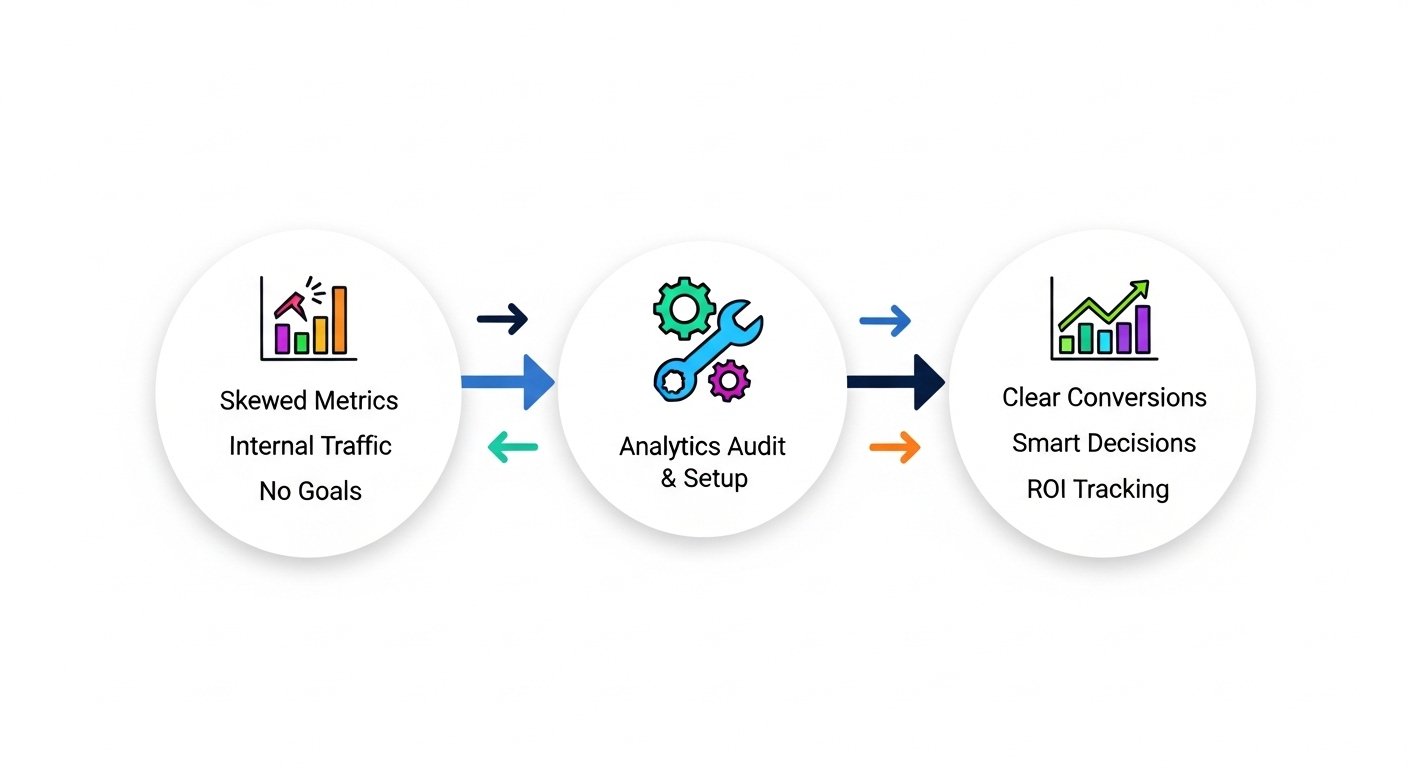
Our process begins with a comprehensive GA4 audit to identify all the issues holding your data back—from tracking gaps and filter problems to misconfigured events. We then work with you to implement a robust, customized setup based on your specific business goals. We don’t just fix the technical problems; we build a framework that provides you with actionable insights through custom reports and dashboards.
Stop guessing and start making data-driven decisions. If you’re ready to unlock the true power of your website data, contact us today for a professional analytics consultation.
Frequently Asked Questions
What is the most common analytics setup mistake?
The most common and impactful mistake is the failure to set up meaningful conversion tracking. Without it, a business is essentially flying blind, unable to measure the ROI of its marketing activities or identify what’s truly working.
How often should I audit my analytics setup?
We recommend a comprehensive audit at least once a year, with smaller quarterly check-ups. An audit is also essential after any major website redesign, migration, or when launching significant new marketing campaigns.
Can I fix my website analytics setup myself?
While basic setup is possible for tech-savvy individuals using guides, a truly robust and customized setup often requires expertise. Complexities like cross-domain tracking, custom event implementation, and server-side tagging are best handled by a professional to ensure data integrity.
What’s the difference between a metric and a dimension in analytics?
A dimension is an attribute of your data, like ‘City’, ‘Traffic Source’, or ‘Page Title’. A metric is a quantitative measurement, like ‘Sessions’, ‘Users’, or ‘Conversion Rate’. Essentially, dimensions describe the data, and metrics measure it.
A solid website analytics setup is the bedrock of successful digital marketing. It empowers you to understand your audience, prove your ROI, and confidently invest in strategies that deliver results. By avoiding common pitfalls and embracing a strategic approach to data, you can turn your website from a simple online brochure into a powerful engine for business growth. Ready to build that foundation? Digimek is here to help.
