



Strategic Ways to Improve Online Visibility Without Wasting Budget
In today’s crowded digital marketplace, getting your business noticed can feel like shouting into the wind. Many companies invest significant funds into digital marketing, only to see minimal returns and a depleted budget. The good news is that you don’t need a massive war chest to make an impact. The key is to work smarter, not just spend more. It is entirely possible to improve online visibility through strategic, cost-effective, and data-driven tactics.
This guide is designed for business owners who want to maximize their marketing ROI. We’ll explore practical methods to enhance your digital footprint, attract the right audience, and grow your business without unnecessary expenditure. At Digimek, we specialize in crafting these efficient growth strategies, and we’re here to share the foundational principles with you.
Foundation First: Optimizing Your Digital Home Base
Before you spend a single dollar on advertising, your website—your digital home base—must be in order. A slow, confusing, or broken website will undermine all your marketing efforts. Visitors will leave, and search engines will rank you lower. Start by focusing on these core areas:
- Website Performance: Your site must load quickly. According to Google, the probability of a visitor leaving increases by 32% as page load time goes from 1 to 3 seconds. Use tools like Google PageSpeed Insights to identify and fix performance bottlenecks.
- Mobile-First Design: The majority of web traffic now comes from mobile devices. Your website must provide a seamless experience on smartphones and tablets. A responsive design that adapts to any screen size is non-negotiable.
- User Experience (UX): Is your site easy to navigate? Can visitors find what they’re looking for within a few clicks? A clear menu structure, readable fonts, and compelling calls-to-action are essential for keeping users engaged and guiding them toward conversion.
- On-Page SEO: This is the practice of optimizing individual web pages to rank higher in search results. It includes using relevant keywords in your titles, headings, and content, writing compelling meta descriptions, and using descriptive alt text for images.
Investing in a solid website foundation is the most cost-effective marketing decision you can make. It ensures that the traffic you do attract has the best possible chance of converting.
Strategic Content Marketing for Sustainable Growth
Content marketing is a powerful long-term strategy for building authority and attracting organic traffic. Instead of creating content for the sake of it, focus on providing genuine value that answers your audience’s questions and solves their problems. A strategic approach involves:
- Keyword Research: Understand what your potential customers are searching for. Use tools to find keywords related to your products or services that have a reasonable search volume and achievable difficulty. Focus on « long-tail keywords » (longer, more specific phrases) which often indicate a higher purchase intent.
- Creating Pillar Content: Develop comprehensive, in-depth guides or articles on core topics in your industry. This « pillar » content can be broken down into smaller blog posts, social media updates, and videos, allowing you to repurpose your efforts efficiently.
- Consistency Over Quantity: Publishing one high-quality, well-researched article per week is far more effective than publishing five mediocre ones. Quality content earns trust, backlinks, and higher search rankings over time.
Leveraging Local SEO to Capture Nearby Customers
For businesses with a physical location or service area, local SEO is a goldmine. It’s a highly effective way to connect with customers actively seeking products or services near them. Best of all, many core local SEO activities are free.
Your top priority should be your Google Business Profile (GBP). A fully optimized GBP listing acts as a digital storefront on Google Search and Maps. Beyond that, focus on building a consistent presence across the web. Here’s a breakdown of key local SEO tactics:
| Local SEO Tactic | Description | Typical Cost | Impact Level |
|---|---|---|---|
| Google Business Profile Optimization | Completely filling out your profile with services, photos, hours, and posts. | Free | Very High |
| Local Citation Building | Ensuring your business name, address, and phone (NAP) are consistent across online directories like Yelp and industry-specific sites. | Low (or free if done manually) | High |
| Online Review Management | Actively encouraging and responding to customer reviews on Google, Yelp, and other platforms. | Free (time investment) | Very High |
| Creating Localized Content | Writing blog posts or creating landing pages for specific neighborhoods or service areas (e.g., « Best Web Design in Downtown Austin »). | Low to Medium | Medium |
Smart Paid Advertising: Maximizing ROI on Every Dollar
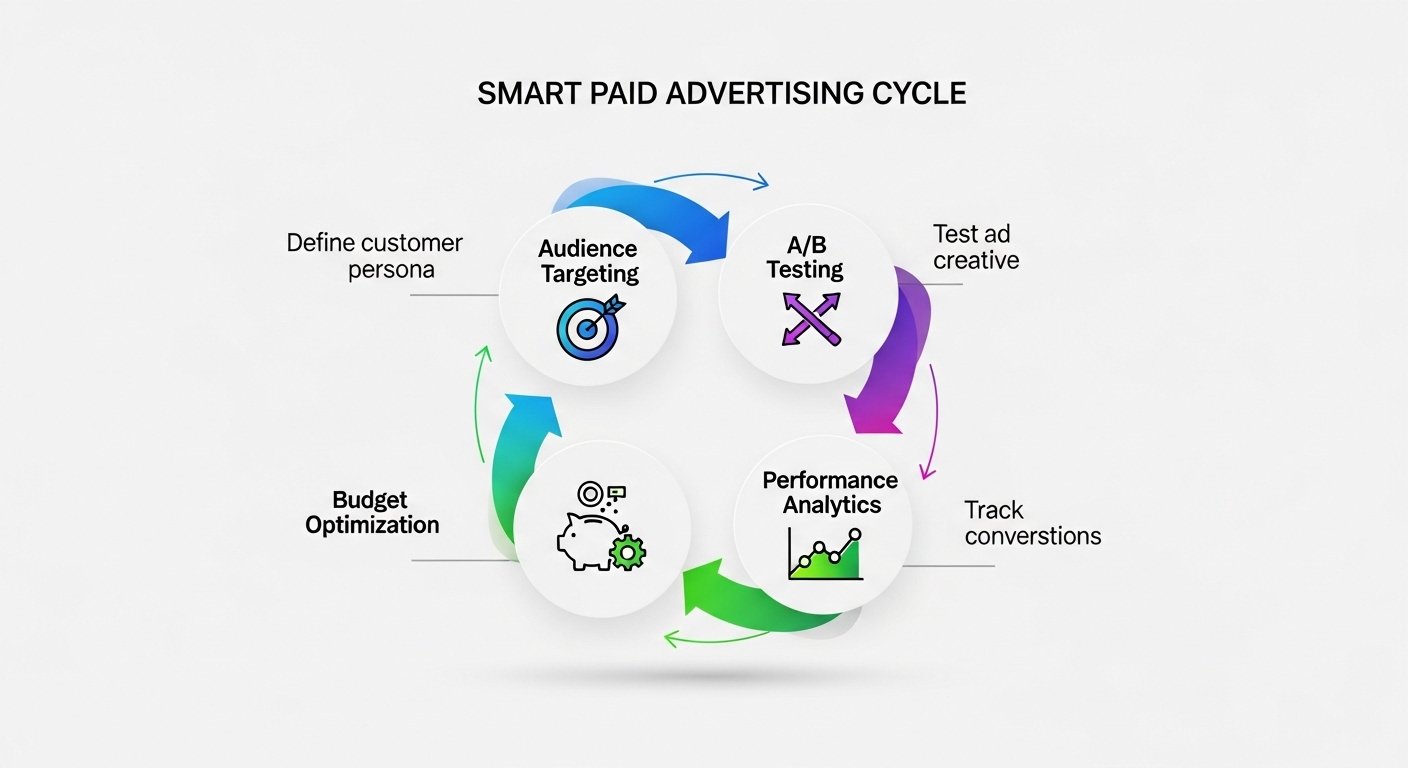
Paid advertising (PPC) can deliver fast results, but it can also drain your budget quickly if not managed correctly. The goal is not to outspend competitors but to out-think them. A budget-conscious approach to paid ads focuses on precision and continuous improvement.
Start with a small, controlled budget. Instead of a broad campaign, focus on a very specific audience segment. Use the powerful targeting options available on platforms like Google Ads and Meta (Facebook/Instagram) to reach users based on their demographics, interests, location, and online behavior. The most critical element is testing. Constantly A/B test different ad copy, headlines, images, and landing pages to see what resonates most with your audience. This iterative process allows you to systematically improve your campaign’s performance and lower your cost-per-acquisition.
Analytics and Measurement: Turning Data into Decisions
You cannot improve what you don’t measure. Wasted marketing spend often comes from a lack of data analysis. Setting up free tools like Google Search Console and Google Analytics 4 is fundamental. These platforms provide invaluable insights into how people find and interact with your website.
Pay close attention to these key metrics:
- Traffic Sources: Where are your visitors coming from? Organic search, social media, direct traffic, or referrals? This tells you which channels are working.
- User Engagement: How long do users stay on your site? Which pages do they visit most? High engagement signals that your content is relevant and valuable.
- Conversion Rate: What percentage of visitors complete a desired action, such as filling out a contact form, making a purchase, or signing up for a newsletter? This is the ultimate measure of your marketing effectiveness.
By regularly reviewing this data, you can identify underperforming strategies and reallocate your budget to the channels and tactics that deliver real results. If you need expert help setting up your analytics for clear, actionable insights, contact the Digimek team today. We can help you build a dashboard that turns complex data into a simple roadmap for growth.
Frequently Asked Questions
How long does it take to improve online visibility with SEO?
SEO is a long-term strategy. While some technical fixes can yield quick results, significant improvements in organic rankings and traffic typically take 4 to 12 months. The timeline depends on your industry’s competitiveness, your starting point, and the consistency of your efforts.
Is paid advertising necessary to get noticed online?
It’s not strictly necessary, but it is a powerful accelerator. Organic methods like SEO and content marketing build a sustainable foundation over time. Paid advertising can provide an immediate boost in traffic and leads, making it a valuable tool for product launches, promotions, or quickly testing market demand.
What’s the most common mistake businesses make with their online marketing budget?
The most common mistake is a lack of clear strategy and measurement. Many businesses spread their budget too thin across too many channels without tracking ROI, or they invest heavily in one tactic (like social media posts) without a proper website or conversion funnel to capitalize on the traffic.
How can a small business compete with larger companies online?
Small businesses can compete effectively by niching down. Instead of trying to be everything to everyone, focus on a specific service, customer type, or geographic area. Excel in that niche with superior customer service, expert content, and a strong local SEO presence. Authenticity and agility are a small business’s greatest advantages.
Ultimately, the path to greater online visibility is paved with strategic decisions, consistent effort, and a commitment to understanding your audience. By focusing on a strong foundation, creating value, and measuring what matters, you can achieve significant growth without wasting your hard-earned budget. Ready to build a smarter marketing strategy? Let’s talk.
