



How to Build a Powerful SEO Content Plan for Your Business
In the competitive digital landscape, simply publishing blog posts or adding pages to your website isn’t enough to guarantee online visibility. Many businesses invest time and resources into content creation only to see minimal return: low traffic, few leads, and no measurable impact on their bottom line. The missing ingredient is almost always a coherent strategy. A well-structured SEO content plan is the blueprint that transforms your content from a cost center into a powerful engine for business growth.
This guide will walk you through the essential steps to create a data-driven content plan that aligns with your business objectives, attracts your ideal customers, and establishes your brand as an authority in its niche. It’s time to move beyond guesswork and start building a content asset that works for you 24/7.
What is an SEO Content Plan (and Why You Need One)
An SEO content plan is a documented strategy that outlines how you will use content to improve your website’s search engine rankings and attract organic traffic. It’s far more than a simple list of blog post ideas. It’s a comprehensive framework that connects your business goals to your content creation efforts, ensuring every piece of content has a specific purpose and a target audience.
Unlike a sporadic approach, a strategic plan provides direction and clarity. It helps you:
- Attract Qualified Traffic: By targeting keywords your potential customers are actively searching for, you draw in visitors who are genuinely interested in your products or services.
- Build Topical Authority: Search engines like Google reward websites that demonstrate deep expertise on a particular subject. A planned approach allows you to build out topic clusters, covering a subject comprehensively and signaling your authority.
- Generate Leads and Sales: Strategic content addresses customer pain points at every stage of the buyer’s journey, guiding them from awareness to consideration and, ultimately, to conversion.
- Maximize ROI: A plan ensures your content budget and resources are spent efficiently on topics that have the highest potential to impact your business goals, eliminating wasted effort on content that nobody sees.
The Core Components of a Winning Content Plan
A robust SEO content plan is built on several key pillars. Each component informs the next, creating a cohesive system for sustainable growth. Understanding these elements is the first step toward building a plan that delivers results.
| Component | Description | Key Tools & Metrics |
|---|---|---|
| Keyword Research | Identifying the specific search terms and questions your target audience uses to find solutions you offer. | Ahrefs, Semrush, Google Keyword Planner; Search Volume, Keyword Difficulty |
| Audience Personas | Creating detailed profiles of your ideal customers, including their goals, challenges, and online behavior. | Customer interviews, surveys, Google Analytics Demographics |
| Competitor Analysis | Analyzing the content strategies of your top competitors to find opportunities and identify content gaps. | SEO tools, manual SERP analysis; Top ranking pages, backlink profiles |
| Topic Clusters | Organizing your content around a central « pillar » page and multiple related « cluster » pages that link back to it. | Mind mapping software, spreadsheets; Internal linking structure |
| Content Calendar | A schedule that dictates what content will be published, when, and on which channels. | Trello, Asana, Google Calendar; Publication frequency, content formats |
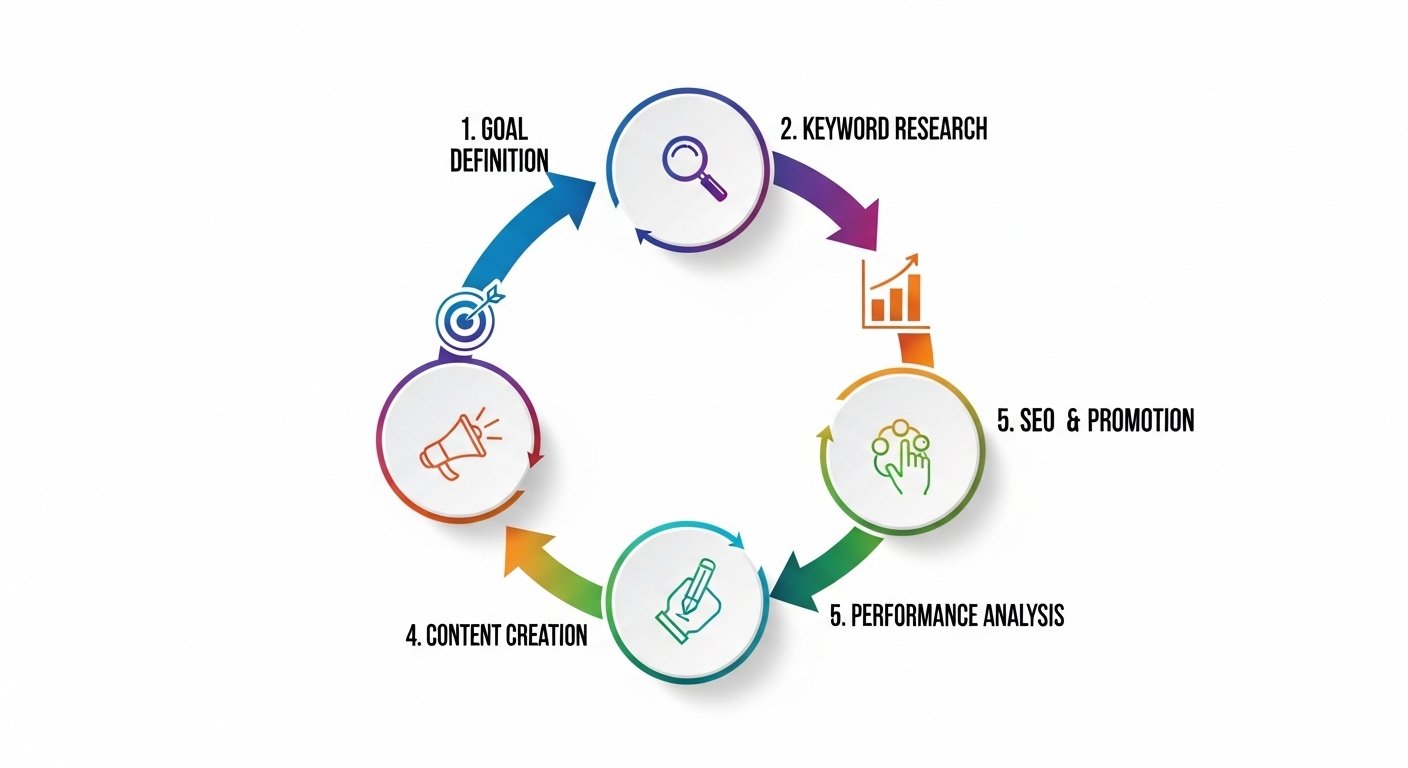
Step-by-Step: Building Your SEO Content Plan
With the core components understood, you can now begin constructing your plan. Follow these steps to create a practical and effective roadmap for your content.
Step 1: Define Your Goals and Audience
Start with the ‘why’. What do you want to achieve? Increase demo requests by 20%? Drive 500 new email subscribers per month? Your goals must be specific and measurable. Simultaneously, refine your buyer personas. Who are you trying to reach? Understanding their pain points is crucial for creating content that resonates.
Step 2: Conduct Foundational Keyword Research
Using SEO tools, brainstorm a list of broad topics related to your business. Then, dive deeper to find long-tail keywords (phrases of 3+ words) that indicate user intent. Look for a balance between search volume and keyword difficulty. These keywords are the foundation of your entire plan.
Step 3: Structure Content with Topic Clusters
Instead of targeting random keywords, organize them into topic clusters. Choose a broad, high-competition keyword for your ‘pillar page’ (e.g., « small business accounting »). Then, identify several related, less competitive long-tail keywords for your ‘cluster content’ (e.g., « how to choose accounting software, » « small business tax deductions »). This structure demonstrates expertise to search engines.
Step 4: Create a Practical Content Calendar
A content calendar brings your plan to life. It’s a schedule that maps out what content you’ll create, its format (blog post, video, case study), the target keyword, the author, and the publication date. This ensures consistency and keeps your team aligned. Start with a realistic publishing cadence—quality and consistency are more important than sheer volume.
Executing and Measuring Your Plan for Long-Term Success
Creating the plan is only half the battle. Successful execution and diligent measurement are what drive results. As you create each piece of content, ensure it adheres to on-page SEO best practices. This includes using your target keyword in the title, headings, and body text, optimizing meta descriptions, and including relevant internal and external links. For guidance, refer to Google’s own SEO Starter Guide.
Once content is published, the work isn’t over. You must track performance. Key metrics to monitor include:
- Organic Traffic: Is your content attracting visitors from search engines?
- Keyword Rankings: Are your pages climbing the search results for your target keywords?
- Conversion Rate: Is the traffic generated by your content leading to sign-ups, downloads, or sales?
- Backlinks: Is your high-quality content earning links from other reputable websites?
Regularly reviewing these metrics allows you to identify what’s working and what isn’t, so you can refine your SEO content plan over time. This iterative process of planning, executing, and analyzing is the key to dominating your niche.
Frequently Asked Questions
What’s the difference between a content plan and a content strategy?
A content strategy is the high-level ‘why’—it defines your goals, audience, and brand voice. An SEO content plan is the tactical ‘how’ and ‘what’—it details the specific topics, keywords, and schedules you’ll use to execute that strategy and achieve search visibility.
How long does it take to see results from an SEO content plan?
SEO is a long-term investment. While you might see some initial movement in a few months, it typically takes 6 to 12 months of consistent execution to see significant, sustainable results in organic traffic and rankings. Patience and consistency are key.
How often should I publish new content?
This depends on your resources and industry. Consistency is more important than frequency. It’s better to publish one high-quality, well-researched article per week than three rushed, low-value posts. Start with a cadence you can realistically maintain.
Building and managing a comprehensive SEO content plan requires expertise, data analysis, and consistent effort. If you’re ready to transform your website into a lead-generation machine but need a professional partner to guide the way, Digimek is here to help. We specialize in creating and executing data-driven content strategies that deliver measurable business growth. Contact us today to discuss how we can build a powerful SEO content plan for your business.
