


Your Essential Brand Identity Checklist for a Winning Website
In the crowded digital marketplace, a generic website is an invisible one. Many businesses launch websites that are visually disjointed, with inconsistent messaging and a confusing user experience. This lack of cohesion doesn’t just look unprofessional; it actively undermines trust and drives potential customers away. The solution is a strong, consistent brand identity. It’s the deliberate expression of your business’s personality, values, and promise, woven into every pixel of your online presence. To achieve this, you need a strategic approach. This comprehensive brand identity checklist is your roadmap to building a website that not only looks great but also connects with your audience and drives business growth.
The Foundation: Your Brand Strategy Blueprint
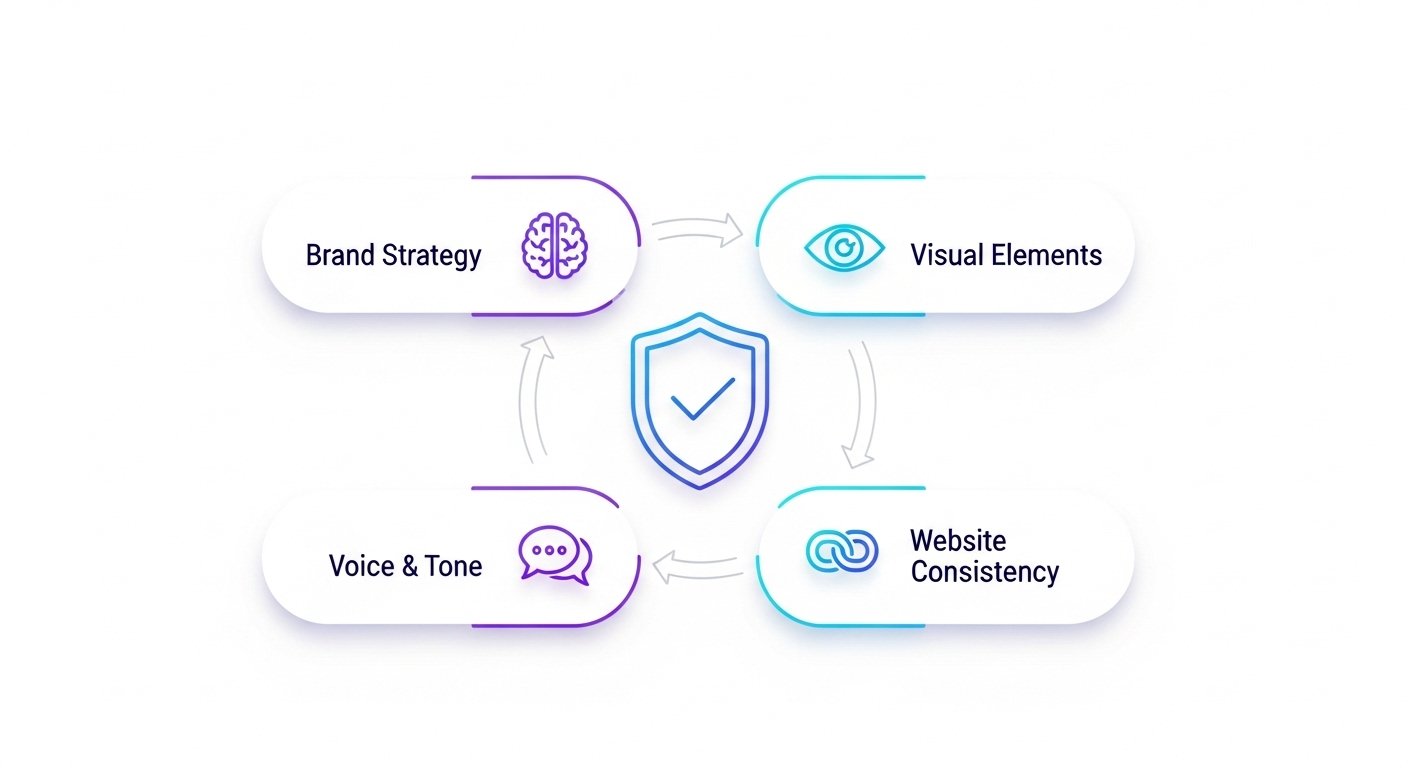
Before you pick a single color or font, you must lay the strategic groundwork. A powerful brand identity is built on a deep understanding of your business and your audience. Without this foundation, your visual and verbal choices will be arbitrary and ineffective. Work through these foundational elements first:
- Mission, Vision, and Values: What is your company’s purpose (mission)? Where do you see it going in the future (vision)? What core principles guide your actions (values)? These answers form the soul of your brand and should influence every decision.
- Target Audience Persona: You can’t connect with everyone. Define your ideal customer in detail. What are their demographics, pain points, goals, and online behaviors? A clear persona helps you tailor your brand identity to resonate with the people who matter most.
- Competitive Analysis: Analyze your top competitors’ websites. What are they doing well with their branding? Where are the gaps? This isn’t about copying them; it’s about finding a unique position in the market and differentiating your brand effectively.
- Unique Value Proposition (UVP): In one or two sentences, what makes you the best choice for your target audience? Your UVP should be clear, compelling, and consistently communicated across your website.
The Visuals: Crafting Your Digital First Impression
With your strategy in place, you can now translate it into a compelling visual language. These are the elements that create an immediate and memorable impression on your website visitors. Consistency here is non-negotiable.
- Logo: Your logo is your brand’s primary identifier. It should be unique, scalable (look good on a favicon and a billboard), and reflective of your brand’s personality. Ensure you have variations for different backgrounds (e.g., full color, one color, reversed).
- Color Palette: Colors evoke emotion and are a powerful branding tool. Choose a primary, secondary, and accent color palette. Document the specific hex codes to ensure perfect consistency across your website, from buttons to headlines. Resources like Adobe Color can help you explore harmonious combinations.
- Typography: Select two to three complementary fonts—one for headings, one for body text, and perhaps an accent font. Your typography should be legible, web-safe (or properly embedded), and match your brand’s tone (e.g., a serif font for a traditional, trustworthy feel; a sans-serif for a modern, clean look).
- Imagery and Iconography: The photos, illustrations, and icons you use must align with your brand. Are they professional and polished, or authentic and user-generated? Bright and energetic, or muted and serious? Define a consistent style for all visual assets.
The impact of a cohesive visual system cannot be overstated. It builds instant recognition and communicates professionalism.
| Element | Strong Brand Identity | Weak Brand Identity |
|---|---|---|
| User Experience | Intuitive, predictable, and reassuring. | Confusing, disjointed, and frustrating. |
| Customer Perception | Professional, trustworthy, and memorable. | Amateurish, unreliable, and forgettable. |
| Call-to-Action (CTA) | Consistently styled buttons that are easy to spot. | Different colors, shapes, and text for CTAs. |
| Overall Feeling | Cohesive and intentional. | Random and thrown together. |
The Voice: Defining Your Brand’s Personality and Messaging
How your brand communicates is just as important as how it looks. Your brand voice is the personality that comes through in your writing. It should be consistent across your entire website, from the homepage headline to the microcopy on a contact form. A well-defined voice builds a relationship with your audience.
- Tone of Voice: Is your brand authoritative and formal, or friendly and conversational? Witty and playful, or straightforward and helpful? Define your primary tone and consider how it might adapt to different contexts (e.g., a blog post vs. an error message). Industry leaders like Nielsen Norman Group emphasize that tone has a major impact on user perception.
- Messaging Hierarchy: Structure your key messages logically. What is the single most important thing a visitor should know when they land on your homepage? What information follows on your service pages or about page? A clear hierarchy guides users through your value proposition.
- Content Style Guide: Document rules for grammar, punctuation, capitalization (e.g., do you capitalize headlines?), and industry-specific terminology. This ensures anyone creating content for your website does so in a consistent manner.
The Application: Your Website Consistency Audit
The final step is to apply your brand identity system across every inch of your website. Use this part of the brand identity checklist to audit your existing site or guide a new build. Scrutinize every page and component for consistency.
- Header and Footer: Does the logo placement, navigation typography, and contact information remain consistent on every page?
- Buttons and Links: Are all primary call-to-action buttons the same color and style? Are text links styled consistently?
- Forms: Do your contact forms, sign-up forms, and checkout fields share the same design language (field styles, button design, error messages)?
- Page Layouts: While content will vary, do your main pages (Home, About, Services, Contact) and post templates share a consistent structural grid and typographic scale?
- Blog and Content Hub: Ensure blog post titles, body text, blockquotes, and image captions all adhere to your defined styles.
A thorough audit often reveals surprising inconsistencies. Fixing them is critical for creating a seamless and professional user experience that reinforces your brand at every turn.
Frequently Asked Questions
What is the difference between brand, branding, and brand identity?
A brand is the overall perception of your company in the minds of consumers. Branding is the active process of shaping that perception. Brand identity is the collection of tangible elements (logo, colors, voice) that you create to communicate the brand.
How often should I review my brand identity?
A full rebrand is a major undertaking, but you should conduct a brand identity audit annually. This helps you ensure consistency and check if your identity still aligns with your business goals and audience, allowing for minor tweaks and refinements as needed.
Can I build a strong brand identity on a small budget?
Absolutely. The most important part of a brand identity is strategy and consistency, which costs nothing but time and effort. You can use free tools like Google Fonts for typography and create a solid color palette yourself. The key is to define your system and stick to it rigorously.
Why is brand consistency so important for a website?
Consistency builds trust and recognition. When visual and verbal cues are predictable, users feel more comfortable and confident navigating your site. It makes your business appear more professional, reliable, and established, which directly impacts conversion rates and customer loyalty.
Building a powerful brand identity is a foundational investment in your business’s digital future. It transforms your website from a simple online brochure into a dynamic engine for growth. While this checklist provides a clear path, executing it with professional polish can be a significant challenge. If you’re ready to build a brand that stands out and connects with your customers, the expert team at Digimek is here to help. Contact us today to discuss your brand and website goals.
