



SaaS Security Basics: A Practical Guide for Business Owners
In today’s digital-first economy, Software-as-a-Service (SaaS) applications are the backbone of business operations. From project management and accounting to customer relationship management, these cloud-based tools drive efficiency and collaboration. However, this convenience comes with a critical responsibility: securing the vast amounts of sensitive data flowing through them. For many business owners, understanding the fundamentals can feel overwhelming. This guide demystifies the essential SaaS security basics, providing a clear roadmap to protect your assets, customers, and reputation.
The High Stakes of SaaS Security for Modern Businesses
Ignoring SaaS security is like leaving the doors to your office unlocked. The consequences of a breach can be devastating, extending far beyond immediate financial loss. A single incident can lead to regulatory fines, legal action, loss of customer trust, and irreparable damage to your brand. The misconception that security is solely the responsibility of the SaaS provider is a dangerous one. While providers secure their infrastructure, you are responsible for how your team uses the application and manages the data within it. This shared responsibility model means that implementing strong internal security practices is not just advisable—it’s non-negotiable for sustainable growth.
The Core Pillars of Foundational SaaS Security
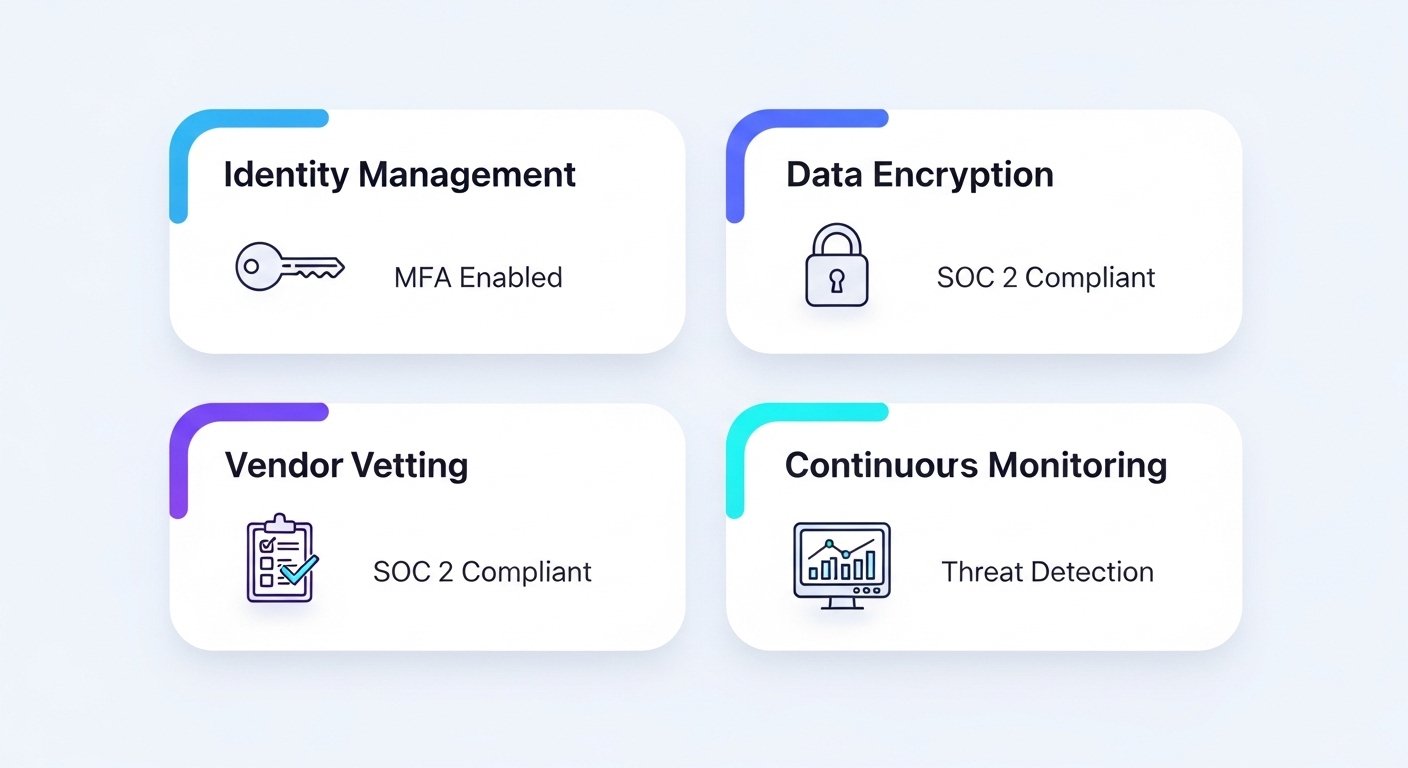
A robust security strategy is built on several key principles. By focusing on these four pillars, you can create a comprehensive defense for your cloud environment and master the SaaS security basics.
1. Identity and Access Management (IAM)
The first line of defense is controlling who can access your applications and what they can do inside them. Weak or stolen credentials are a primary vector for cyberattacks. Implementing strong IAM practices is crucial.
- Multi-Factor Authentication (MFA): Require a second form of verification (like a code from a mobile app) in addition to a password. This single step can block the vast majority of automated attacks.
- Principle of Least Privilege (PoLP): Grant employees access only to the data and features they absolutely need to perform their jobs. A marketing intern, for example, should not have administrative access to your financial software.
- Strong Password Policies: Enforce the use of long, complex, and unique passwords for each SaaS application.
2. Data Governance and Protection
You need to know what data you have, where it resides, and how it’s protected. Start by classifying your data into categories like public, internal, confidential, and restricted. This helps prioritize your security efforts. Ensure your SaaS providers use strong encryption for data both in transit (as it travels over the internet) and at rest (when stored on their servers). Look for providers that are transparent about their encryption standards, such as AES-256.
3. SaaS Vendor Security Assessment
Not all SaaS providers are created equal. Before entrusting a vendor with your data, conduct thorough due diligence. Scrutinize their security policies, data handling procedures, and compliance certifications. Key certifications indicate that a vendor has been audited by a third party and meets stringent security standards. For more information on security best practices, the Cloud Security Alliance (CSA) provides extensive resources.
Common Security & Compliance Frameworks
| Framework | Focus Area | Primary Relevance |
|---|---|---|
| SOC 2 | Security, Availability, Confidentiality, Privacy | Service organizations and SaaS providers, especially in North America. Learn more at the AICPA website. |
| ISO/IEC 27001 | Information Security Management Systems (ISMS) | Globally recognized standard for comprehensive security management. |
| GDPR | Personal data protection for EU citizens | Any business handling data of EU residents. |
4. Continuous Monitoring and Threat Detection
SaaS security is not a one-time setup; it’s an ongoing process. Regularly review user access logs, audit administrative changes, and monitor for unusual activity. Many SaaS platforms offer built-in security dashboards that can help you track key metrics. Set up alerts for suspicious events, such as multiple failed login attempts or access from unrecognized locations. This proactive approach allows you to detect and respond to potential threats before they escalate into full-blown breaches.
Your Action Plan: Implementing SaaS Security Basics Today
Ready to take control of your SaaS environment? Here are practical steps you can start implementing immediately:
- Create a SaaS Inventory: Document every SaaS application your business uses, who has access, and what kind of data it holds. This inventory is the foundation of your security strategy.
- Roll Out MFA Everywhere: Prioritize enabling multi-factor authentication on all critical applications, especially those containing financial or customer data.
- Conduct an Access Review: Audit all user accounts and permissions. Revoke unnecessary access and enforce the principle of least privilege.
- Educate Your Team: Your employees are a crucial part of your defense. Train them on recognizing phishing attempts, using strong passwords, and understanding their security responsibilities. The NIST framework offers great guidance for businesses of all sizes.
Partnering with Digimek for Advanced SaaS Security
Mastering the SaaS security basics is a powerful first step, but creating a truly resilient and scalable security posture can be complex and time-consuming. As your business grows, so do the threats and the complexity of your SaaS ecosystem. At Digimek, we help businesses like yours move beyond the basics to implement advanced security strategies. From comprehensive security audits and vendor risk assessments to automated monitoring and incident response planning, we provide the expertise you need to operate with confidence.
Don’t let security become a bottleneck to your growth. If you’re ready to build a professional-grade security framework for your cloud applications, contact us today for a consultation. We’ll help you navigate the complexities and build a secure foundation for the future.
Frequently Asked Questions About SaaS Security
What is the biggest SaaS security risk for most businesses?
For most small and medium-sized businesses, the biggest risk is human error and poor access management. This includes weak or reused passwords, failing to enable MFA, and granting excessive user permissions. These factors make it significantly easier for attackers to gain unauthorized access.
How is SaaS security different from traditional on-premise security?
With traditional security, you control the entire stack—from the physical server to the application. In a SaaS model, you enter a shared responsibility agreement. The provider secures the cloud infrastructure, but you are responsible for securing your data within the application, managing user access, and configuring settings correctly.
Can I rely solely on my SaaS provider for security?
No. While reputable providers offer robust security for their platform, they cannot protect you from internal threats, misconfigurations, or phishing attacks that target your users. You must implement your own security policies and controls to complement the provider’s efforts.
In conclusion, integrating SaaS applications into your business is essential for modern competitiveness, but it must be done securely. By understanding and implementing the SaaS security basics—controlling access, protecting data, vetting vendors, and continuous monitoring—you can significantly reduce your risk profile. Treat security not as a technical chore, but as a fundamental business function that enables trust, ensures compliance, and protects your bottom line. Take the first step today to secure your digital assets and empower your business to thrive in the cloud.
