



Your Essential Website Speed Optimization Guide for Business Growth
In today’s fast-paced digital marketplace, every second counts. A slow-loading website isn’t just a minor inconvenience; it’s a direct threat to your bottom line. Visitors lose patience, bounce rates soar, and search engines like Google penalize sluggish sites in their rankings. For a business owner, this translates to lost leads, fewer sales, and a damaged brand reputation. Effective website speed optimization is no longer a technical luxury—it’s a fundamental pillar of a successful online strategy.
This guide is designed for business owners, not just developers. We’ll break down the essential steps you can take to transform your website from a slow-moving liability into a high-performance asset that attracts, engages, and converts visitors. We will explore everything from foundational hosting choices to advanced optimization techniques, providing a clear roadmap to a faster, more profitable online presence.
Why Website Speed is a Game-Changer for Your Business
The performance of your website directly impacts three critical areas of your business: user experience, search engine rankings, and conversion rates. A user who lands on a page that takes more than a few seconds to load is highly likely to leave and never return. This negative first impression can undo all your marketing efforts.
Furthermore, Google has made page experience, including loading performance metrics known as Core Web Vitals, a significant ranking factor. A faster website is more likely to rank higher in search results, increasing your visibility to potential customers. Ultimately, a snappy, responsive site leads to higher engagement, longer session durations, and a direct increase in conversions, whether that means making a purchase, filling out a form, or calling your business.
How to Diagnose Your Website’s Performance
Before you can improve your site’s speed, you need a baseline. Guesswork isn’t enough; you need objective data. Fortunately, several free and powerful tools can analyze your site and provide a detailed performance report. The most widely used tool is Google’s own PageSpeed Insights. Simply enter your website’s URL, and it will generate a score for both mobile and desktop, along with specific recommendations for improvement.
When you review your report, pay attention to key metrics like:
- Largest Contentful Paint (LCP): How long it takes for the main content of the page to load.
- First Input Delay (FID): How long it takes for your site to respond to a user’s first interaction (like a click).
- Cumulative Layout Shift (CLS): Measures the visual stability of your page as it loads.
Understanding these metrics helps you pinpoint exactly where the performance bottlenecks are, providing a clear starting point for your optimization efforts.
The Core Pillars of Website Speed Optimization
Improving website performance involves a multi-faceted approach. While some tasks are highly technical, several core areas offer the most significant impact. Focusing on these pillars will yield the best results for your time and investment.
1. Image and Media Optimization
Large, unoptimized images are one of the most common causes of slow websites. Every image you upload should be compressed to reduce its file size without sacrificing too much quality. Additionally, using modern image formats like WebP can provide superior compression compared to traditional JPEGs and PNGs. You can learn more about the benefits of this format directly from Google’s documentation on WebP. Implementing « lazy loading, » where images only load as the user scrolls down the page, can also dramatically improve initial load times.
2. Efficient Code and Caching
Your website’s code (HTML, CSS, JavaScript) can become bloated over time, especially on platforms like WordPress where themes and plugins add extra scripts. « Minifying » this code removes unnecessary characters and spaces, making the files smaller and faster to download. Furthermore, implementing browser caching allows returning visitors’ browsers to store static files locally. This means on subsequent visits, the browser doesn’t have to re-download everything, making the site feel almost instantaneous.
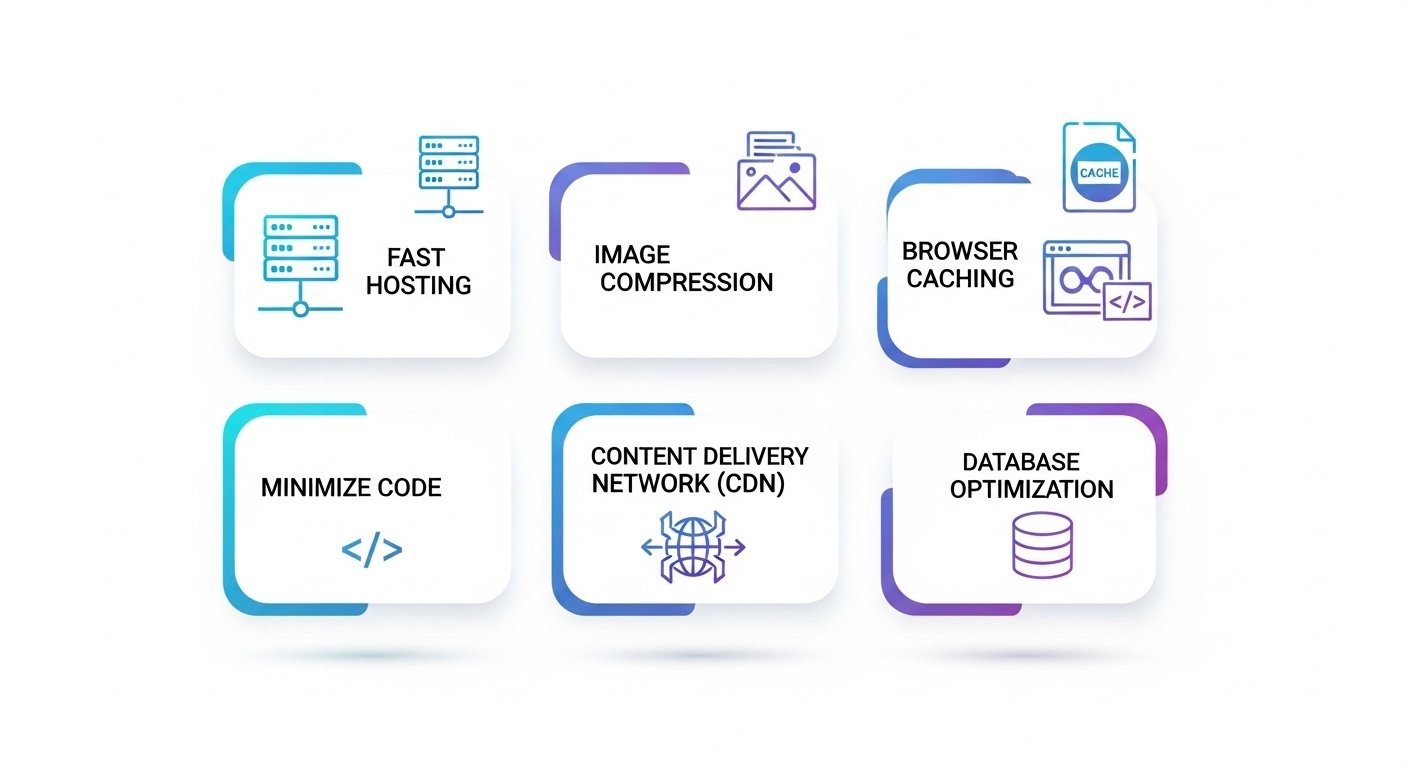
3. Content Delivery Network (CDN)
A CDN is a network of servers distributed globally. When you use a CDN, it stores a cached copy of your website’s static assets (like images and code) on these servers. When a user visits your site, the content is delivered from the server geographically closest to them, drastically reducing latency and load times for a global audience. Reputable services provide clear explanations of how a CDN works to accelerate content delivery.
Choosing the Right Hosting Foundation
Your website’s hosting is its digital foundation. No amount of on-site optimization can fully compensate for a slow, low-quality hosting server. Cheap, shared hosting plans often cram thousands of websites onto a single server, leading to slow performance during peak traffic times. Investing in a superior hosting solution is one of the most impactful upgrades you can make.
| Hosting Type | Best For | Performance | Cost |
|---|---|---|---|
| Shared Hosting | New blogs, personal sites | Low to Moderate | $ |
| VPS Hosting | Growing businesses, eCommerce | Moderate to High | $$ |
| Dedicated Hosting | High-traffic enterprises | Very High | $$$ |
| Managed WordPress Hosting | Businesses wanting a hands-off solution | High to Very High | $$-$$$ |
For most businesses, a Virtual Private Server (VPS) or a Managed WordPress Hosting plan offers the best balance of performance, security, and cost. These solutions provide dedicated resources and are often optimized specifically for speed.
Why Partnering with an Expert Delivers Real Results
While understanding the basics of website speed optimization is valuable, implementing a comprehensive strategy can be complex and time-consuming. A misconfigured setting or poorly optimized plugin can inadvertently slow your site down or even break it. This is where partnering with a digital performance expert can provide a significant return on investment.
At Digimek, we specialize in conducting in-depth performance audits to identify every opportunity for improvement. Our team handles the technical heavy lifting—from server-level configuration and database optimization to code minification and ongoing monitoring—allowing you to focus on running your business. We transform your website into a reliable, high-speed engine for growth. Ready to unlock your website’s full potential? Contact Digimek today for a comprehensive speed audit and optimization plan.
Frequently Asked Questions About Website Speed
How fast should my website be?
Ideally, your page should load in under 3 seconds. For key metrics like Largest Contentful Paint (LCP), Google recommends a target of 2.5 seconds or less to provide a good user experience.
Can I do website speed optimization myself?
Yes, you can perform basic tasks like compressing images and using caching plugins. However, achieving optimal performance often requires technical expertise in areas like server configuration, code optimization, and database management, where a professional can provide more significant and lasting results.
What are Core Web Vitals?
Core Web Vitals are a set of specific metrics Google uses to measure a webpage’s overall user experience. They focus on loading performance (LCP), interactivity (FID), and visual stability (CLS). Improving these scores can directly benefit your SEO rankings.
Will a faster website improve my sales?
Absolutely. Numerous studies have shown a direct correlation between faster page load times and higher conversion rates. A faster site reduces visitor frustration, builds trust, and encourages users to complete actions like making a purchase or submitting a form.
In conclusion, treating website speed optimization as an ongoing priority is essential for any business that wants to thrive online. By focusing on a strong hosting foundation, optimizing your media and code, and leveraging tools like a CDN, you create a superior user experience that search engines and customers will reward. For a truly competitive edge, partnering with an expert ensures your site is not just fast, but strategically engineered for peak performance and business growth.
